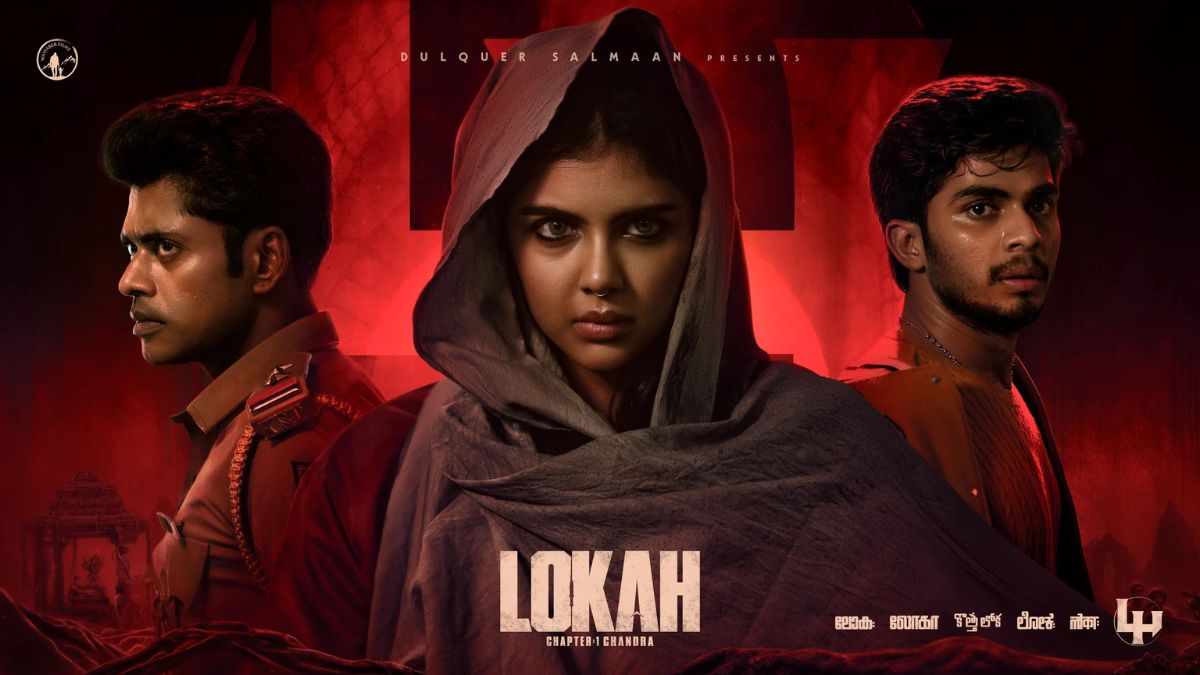
Lokah Chapter 1: Chandra is the newest big hit in Malayalam cinema. The film is drawing crowds and it is headed towards being one of the biggest hits in Mollywood. Audiences in Kerala, Tamil Nadu and Telangana are queuing up, and the film has already crossed the collections of 10 digits in a few South Indian states.
However, Lokah is also not faring well in the Hindi belt although it has done well in the South. North Indian collections are not doing well and it is to see how Malayalam films can enhance their presence beyond local circles.

The South Stars That Are Rocking the Hindi Market
Telugu, Tamil and Kannada movie stars have managed to leave a positive impression on the Hindi-speaking market in recent years. Films like Pushpa, KGF and Jailer have registered record opening and prolonged theatres run in North India.
In order to be a pan-Indian film, it is important to penetrate the Hindi belt. This increases the reach of the audience, makes more box office, and expands the film’s reach. This makes entry into the North Indian market an utmost priority to the filmmakers in pursuit of national success.
Sadly, Malayalam film has been unable, up until now, to replicate this achievement in the Hindi belt in the same degree of art and storytelling potential.
The Growing Visibility of Malayalam Cinema – But Still Not Enough
Mollywood is a firm that has been consistently expanding during the recent years. Its films are now receiving wider releases and better dubbing in neighboring states like Tamil Nadu and Telangana. Malayalam cinema is slowly attracting more viewers through enhanced distribution network and marketing strategies.
Lokah is not an exception either. It has managed to rake in collections of more than ten digits in the Tamil Nadu and Telugu-speaking states to emerge as one of the industry’s top performers outside of Kerala.
But the Hindi belt is slippery. The dubbed film is not descending on the viewers in North India as other South blockbusters have. Researchers are attributing the difference to fewer campaigns, the lack of stars, and cultural divides that require more compelling storylines to be exciting for non-South tourists.
The Numbers Tell the Story
The appeal and popularity of the movie is reflected in its collections across the South. Lokah has already reached records in Telugu states and Tamil Nadu with which several regional movies can only dream of. The visuals, the action shots, and the narrative have been accepted well by the word of mouth as well and the film has gone on to receive a healthy run at the box office.
On the other hand, the Hindi version’s collections continue to be weak. The opening days of the film were quite average and had fewer full houses in the theatres. Trade experts believe that without the film getting off the ground through the OTT or extended promotional periods, it won’t reach bigger crowds in North India.
OTT: The Franchise has a Potential Lifeline
In Lokah, its slow footfalls in cinemas are one of its drawbacks, but its plus point is that the movie is a part of a franchise. If Lokah Chapter 1 does well in OTTs, particularly among the North Indian audience, then it can earn fanbase that will be more than eager to watch part 2.
The implementation of dubbing versions on streaming devices like Netflix, Amazon Prime Video, and Disney+ Hotstar is making the audiences connect even more with the storyline with subtitles, without being hindered by geographical differences. If the audience gets accustomed to the characters and storyline through the digital channels, chances are that the franchise will register better box office numbers once Lokah Chapter 2 is out.
This is a positive situation that trade operators are optimistic about. A successful OTT release can not only boost the viewership but also allow the filmmakers to pump in more money for advertisements, starring, and marketing strategies of the next sequel.
Lessons of Malayalam Cinema
The Lokah experience demonstrates the opportunities and challenges for Mollywood in trying to make a pan-India footprint. The journey in the film points to the necessity of:
- Increased Strength in North India: The leveraging of the local tastes and popular platforms can enhance the reach.
- Strategic Casting: This may include well-known faces familiar to Hindi audiences or stars in order to create an overnight name.
- Storytelling Crossing Cultures: Issues which are universally perceived, such as family, emotions, and heroism, may become more in vogue.
- Leaping on OTT Platforms: Online releases have the ability to create a buzz and experiment with a new market among new audiences.

The Destiny of Lokah and Mollywood?
The evolution of Lokah to meet the expectation of the audience and being able to use new platforms is the future of Lokah in the Hindi belt. The second half of the movie with the advantage of experience of the theatrical show has a chance to be more effective.
In the meantime, Malayalam cinema continues to fine-tune its approach to wider markets. Multilingual campaigns, multidimensional partnerships, and innovative storytelling will make up some of the strategies that filmmakers hope to pursue in an attempt to emulate the success enjoyed by the Telugu and Kannada industries.
Read Also :- https://newspep.com/2025/09/08/pawan-kalyans-og-sets-new-benchmarks-with-unprecedented-advance-bookings/
Conclusion
Lokah Chapter 1: Chandra is one of the shining examples of Malayalam film growth in South India and simultaneously it depicts the challenge of reaching the Hindi belt. While box office in North India is not great, franchise potential of this movie and success through OTT can be a new door in the new releases.
As the industry takes keen note, Lokah is bound to open the gates of other Malayalam films to bridge gaps across Indian audiences, tale by tale.
Follow us on Instagram